
What if you could learn to understand your body’s signals and use them to manage stress?
A meta-analysis looked at 24 studies with nearly 500 participants. It found that HRV biofeedback led to a large reduction in self-reported stress and anxiety. The results were similar to the effects seen with some established treatments. Biofeedback does not use medication. Instead, it helps you notice what your body is doing and learn how to respond.
So, what exactly is biofeedback? How does it work? And what can you expect from training?
What Is Biofeedback?
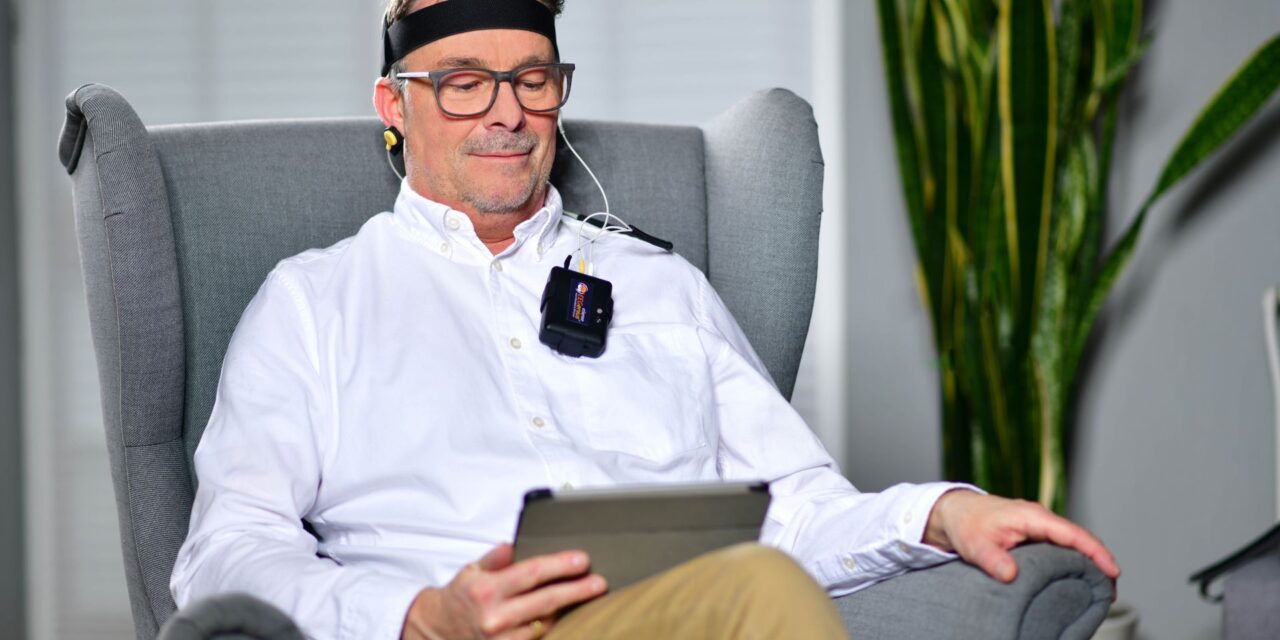
Biofeedback is a type of training that helps you understand what is happening inside your body. Non-invasive sensors measure things like heart rate, muscle tension, or skin temperature. You can then see those signals on a screen as they happen.
With help from a practitioner, you learn what these changes mean. You also learn ways to influence your body’s response to stress.
You may have used a basic form of biofeedback without knowing it. Think about checking your pulse. Or noticing that your hands feel cold. Even stepping on a scale gives you information about your body.
Clinical biofeedback works in a similar way. The main difference is the equipment. The sensors are more precise. You also have a trained practitioner who can help you understand the information.
How Does Biofeedback Work?
A session usually starts with small sensors placed on your skin. They are non-invasive and do not hurt. The sensors pick up signals your body is already producing.
Those signals appear on a screen. You can watch them change in real time. This gives you a better idea of how your body responds to different techniques.
Your practitioner will guide you through breathing exercises, muscle release, or attention exercises. As you practice, you can see how your readings change.
Over time, you start to notice what helps you feel calmer. You can then practice those skills at home. The goal is to make them easier to use in everyday life.
What Does Biofeedback Measure?
Heart Rate and Heart Rate Variability
HRV shows how your heart rhythm changes from one moment to the next, tracking the time between beats. It can give you useful information about how your nervous system responds to stress and recovery.
Breathing and Respiration
Your breathing rate, rhythm, and depth can change when you are stressed. This is why breathing is often one of the first things practitioners work on with clients.
Skin Temperature
Your hands and feet can become colder when you are stressed. This happens as blood flow shifts toward the body’s core. When you relax, your peripheral skin temperature can rise again. This makes it a useful signal to track.
Muscle Activity and EMG
Electromyography, or EMG, measures muscle tension. You may hold tension without even noticing it. This can happen during a stressful day. EMG can help you see these changes and learn how to release that tension.
Skin Conductance / Electrodermal Activity
This is also called galvanic skin response. It tracks small changes in sweat gland activity. These changes can be linked to nervous system arousal.
Neurofeedback and EEG
Neurofeedback measures brainwave activity through EEG (Electroencephalogram). It uses the same basic idea of real-time feedback. However, it is different from conventional biofeedback. It also usually has its own training methods and protocols.
What Are the Different Types of Biofeedback?
- HRV biofeedback, focused on heart rhythm patterns
- Respiratory biofeedback, focused on breathing mechanics
- EMG biofeedback, focused on muscle tension
- Thermal biofeedback, focused on skin temperature
- Electrodermal biofeedback, focused on skin conductance
- Neurofeedback, focused on brainwave activity
Each type focuses on a different part of the body’s response. Your practitioner may use one type or combine several. The choice usually depends on your symptoms and goals.
What Is Biofeedback Used For?
Stress and Anxiety
Stress and anxiety are two areas where biofeedback has good research support. It helps you notice your body’s stress response as it happens. With practice, you can learn ways to bring that response down.
Headaches and Migraine
Biofeedback has been used for headache management for many years. Thermal and EMG biofeedback are common approaches.
Research suggests that it may help reduce how often headaches occur. Results are not the same for everyone. Biofeedback is also often used alongside medical treatment rather than instead of it.
Pain and Muscle Tension
Chronic pain can sometimes lead to muscle guarding and tension. You may not always notice that you are holding your muscles tight.
Biofeedback can help you identify these patterns. It can also help you practice releasing some of that tension.
Sleep and Relaxation
Stress can make it harder for the body to settle down at night. The skills used in biofeedback can help you learn to relax your body.
These skills may also support better sleep. However, results can vary from person to person.
Performance and Self-Regulation
Athletes, students, and performers may use biofeedback to improve focus and stay calm under pressure.
The goal is not to remove arousal completely. It is to learn how to keep it at a level that helps you perform instead of getting in the way.
What Biofeedback Is Not
Biofeedback Is Not:
- A standalone diagnostic test. It shows you physiological patterns. It does not diagnose a medical condition.
- A substitute for medical care. If you have a condition that needs a doctor’s attention, biofeedback can be used alongside that care. It should not replace it.
- The same as simply relaxing. Biofeedback is an active training process. You learn specific skills and practice using them.
- Isn’t the same thing as neurofeedback, even though the two are often confused.
- Doesn’t guarantee a specific outcome. Your results can depend on regular practice and how your body responds.
- Isn’t the right fit for every person or every condition.
Why Practice Matters in Biofeedback
Biofeedback does not stop when the session ends. Most practitioners ask clients to practice the techniques at home. This may be twice a day for about ten minutes.
You may also be asked to keep a short training log. Write down what you noticed and which techniques you used.
The log can be helpful. It gives you a record of what works for you. It can also show which techniques help in certain situations.
Your practitioner can use this information during your next session. Most entries take less than a minute. There is no need to spend a long time writing everything down.
The regular practice is what helps turn the techniques into everyday skills. You can then use them when you need them. This could be during a stressful meeting, before a test, or during a pain flare-up.
What Happens During a Biofeedback Session?
Before the session, you and your practitioner talk about your symptoms and goals. You then decide which signals you want to monitor.
During the session, sensors are placed on your skin. You watch your physiological signals on a screen. Your practitioner guides you through different techniques while you see how your body responds.
After the session, you talk about what you noticed. You decide what to practice at home. You can then track your progress before your next visit.
Curious what this looks like at Insight Psychological Group? Explore our biofeedback services in New Jersey to see how sessions work with our specialist.
FAQs
1. What is biofeedback in simple terms?
It’s a way to use sensors to see your body’s signals in real time. You can then learn to recognize those signals and influence your stress response.
2. How does biofeedback work?
Sensors track signals such as heart rate variability or muscle tension. The information appears on a screen. A practitioner guides you through different techniques while you watch your readings change. You then practice those skills between sessions.
3. Is biofeedback safe?
Yes. Biofeedback is non-invasive. It does not involve medication or any physical treatment beyond sensors placed on the skin.
4. Does biofeedback work for stress and anxiety?
Research generally supports biofeedback, especially HRV biofeedback, as a helpful approach for stress and anxiety. However, results can vary from person to person.
5. What is the difference between biofeedback and neurofeedback?
Neurofeedback measures brainwave activity using EEG. Conventional biofeedback measures other signals, such as heart rate, muscle tension, or skin temperature. Both use real-time feedback, but they are different approaches.
6. Do I need to practice biofeedback at home?
Yes. Practice is an important part of biofeedback. Many practitioners recommend short sessions, often around ten minutes twice a day. You may also keep a simple log to see which techniques work best for you.
Biofeedback Research and Evidence
Biofeedback has been used in clinical settings for many years. Research has also continued to grow, especially around HRV biofeedback and stress-related conditions.
Research reviews generally show benefits for stress and anxiety. There is also research supporting its use for headaches and migraines, chronic pain, sleep difficulties, digestive problems, hypertension, and autoimmune disorders.
Results can also depend on the condition, the type of biofeedback used, and how often you practice between sessions.
If you want to learn more about the research, schedule a discussion with our Biofeedback specialist.
Interested in biofeedback in New Jersey? Learn about biofeedback services, our specialists, session options, and how to get started with Insight Psychological Group.