
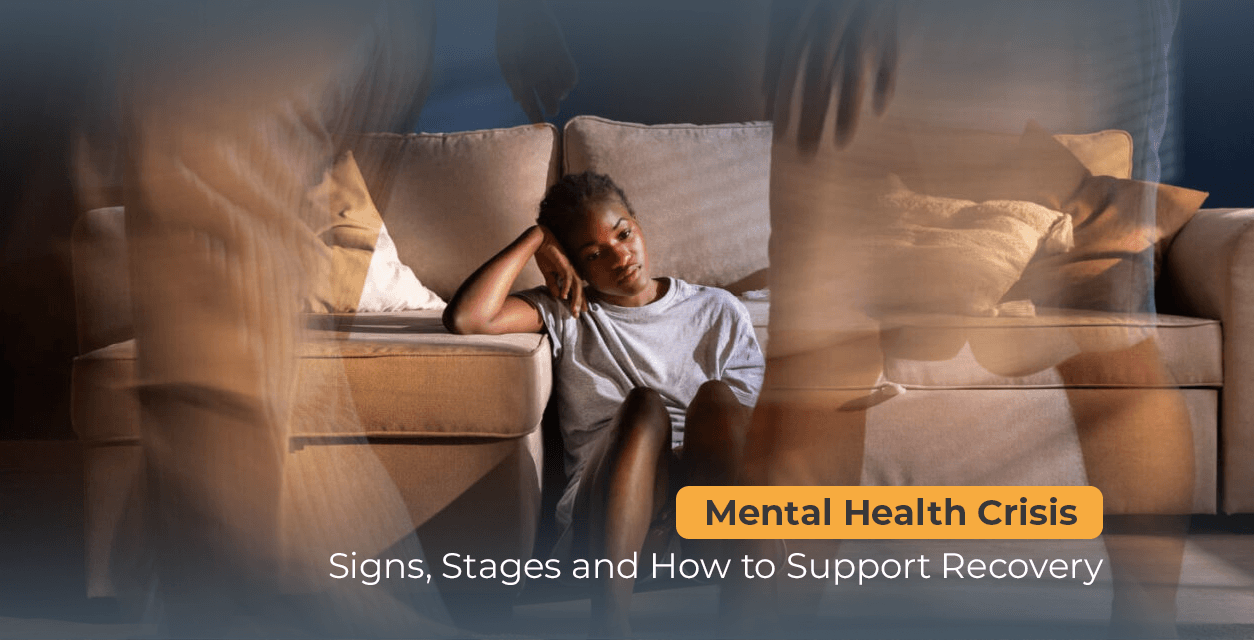
When we begin focusing on improving our mental health and becoming more aware of it, we often hear the phrase “mental health crisis.” Despite how often the term is used, it is frequently misunderstood or minimized. Many people are unsure what the phrase actually means. A mental health crisis can feel extremely intense, overwhelming, and heavy both for the person experiencing it and for those who care about them. However, what often helps someone move toward recovery rather than feeling consumed by helplessness is understanding what a mental health crisis is and recognizing that support is available.
What Is a Mental Health Crisis?
A mental health crisis is a highly intense emotional state in which a person feels overwhelmed and unable to cope. A mental health crisis is not a sign of weakness or failure. It is a sign that someone is overwhelmed and in need of support. People may feel frustrated, hopeless, or as though nothing is helping. Experiences vary widely; some individuals may feel extreme anxiety or depression, while others may experience trauma responses, panic, psychosis, or suicidal thoughts.
One of the key indicators of a crisis is when a person can no longer safely manage daily life on their own or feels unable to cope with reality as they normally would.
Recognizing the Signs of a Mental Health Crisis
Recognizing the early signs of a mental health crisis can help prevent further distress and ensure timely support. While symptoms differ from person to person, there are several common warning signs.
A person may show significant changes in behavior, such as neglecting personal hygiene, withdrawing from social interactions, or struggling to complete routine tasks. They may seem unlike themselves.
Intense mood swings are also common. A person might experience sudden anger, deep sadness, or emotional reactions that feel out of character. Feelings of hopelessness are another warning sign. Statements such as “I can’t do this anymore,” “Nothing will ever get better,” or “Everyone would be better off without me” should always be taken seriously.
Some individuals may experience symptoms of psychosis, including strong beliefs that are not based in reality (delusions) or seeing or hearing things that others do not (hallucinations). Risky behaviors such as reckless driving, increased substance use, or self-harm can also signal a crisis.
Disorientation, confusion, or a noticeable decline in self-care may indicate that someone is struggling and may need immediate support.
The Phases of Crisis Mental Health
A mental health crisis rarely happens all at once. It often develops over time and may move through different stages. Understanding these phases can help us respond with patience, empathy, and appropriate support. Though not set in stone, the phases described below work well to give structure to an otherwise broad topic:
1. The Pre-Crisis Phase
This is before the crisis fully develops. Tension and distress begin to build, often leading to increased anxiety, irritability, sleep disturbances, or a sense of losing control. Intervening at this stage can be particularly helpful.
2. The Acute Crisis Phase
This is the most intense stage. A person may feel overwhelmed by stress, anxiety, depression, or emotional pain. Coping strategies that once worked may no longer be effective. Immediate support is often necessary to ensure safety and stabilization.
3. The Recovery Phase
This is when the individual starts improving their mental health, and emotional intensity gradually decreases. With support, the person begins to regain stability and a sense of control. However, they may still feel emotionally exhausted, vulnerable, or depleted.
4. The Post-Crisis Phase
In this stage, the person continues healing and rebuilding. They may develop healthier coping skills, strengthen support systems, and gain insight into what contributed to the crisis. This phase often focuses on long-term resilience and prevention.
When to Seek Immediate Help
If you or someone you care about is experiencing a mental health crisis that includes suicidal thoughts, psychosis, or a risk of harm to themselves or others, immediate support is essential. Signs such as talking about wanting to die, experiencing hallucinations or delusions, extreme confusion, or engaging in dangerous behavior should never be ignored.
In these situations, do not wait for symptoms to pass. Contact emergency services right away or reach out to a crisis hotline for immediate assistance. In the U.S., you can call or text 988, the Suicide & Crisis Lifeline, for free, confidential support 24/7. If you are outside the U.S., contact your local emergency number or a regional mental health crisis line.
Seeking urgent help is a vital step toward safety, stabilization, and recovery.
Steps to Support Individuals Facing a Mental Health Crisis
1. Stay Calm and Present
Your calm presence can be grounding for someone in crisis. Speaking gently and reassuringly can help reduce fear and agitation.
2. Listening With No Judgment
Avoid arguing, minimizing, or trying to “fix” everything immediately. Simply being present and saying, “I’m here for you” or “You don’t have to go through this alone,” can be deeply comforting.
3. Safety
Safety is the top priority. If the person is at risk of harming themselves or others, do not leave them alone and seek professional help immediately.
4. Ask Directly About Suicide
It is okay to ask directly whether someone is having suicidal thoughts. Research shows that asking does not increase risk; it opens the door for honest conversation and support.
5. Encourage Professional Help
Gently encourage contacting a therapist, doctor, or crisis line. Offering to help make the call to their therapist, a mental health crisis hotline, such as 988, can make this step feel less overwhelming.
6. Take Care of Yourself
Supporting someone in crisis can be emotionally draining. Make sure you also seek support and take care of your own well-being.
If you or someone you care about is experiencing a mental health crisis, professional support can make a critical difference. Insight Psychological Group offers compassionate, evidence-based care to support recovery.
FAQs
What is considered a mental health crisis?
A mental health crisis is a situation where emotional distress becomes so severe that a person is unable to function safely or manage daily life without immediate support.
What are common signs of a mental health crisis?
Signs include extreme mood changes, withdrawal from daily activities, neglect of personal care, feelings of hopelessness, substance misuse, self-harm, or suicidal thoughts.
Is a mental health crisis the same for everyone?
No. Mental health crises vary widely and may involve anxiety, depression, trauma responses, psychosis, or suicidal ideation, depending on the individual.
What should I do if someone is in a mental health crisis?
Stay calm, listen without judgment, ensure their safety, ask directly about suicidal thoughts, and encourage professional or emergency support when needed.
When should professional help be sought during a mental health crisis?
Professional help should be sought immediately if symptoms interfere with daily functioning, involve self-harm or suicidal thoughts, or worsen despite support from loved ones.
Can therapy help after a mental health crisis?
Yes. Psychotherapy helps individuals process the crisis, build coping skills, and reduce the risk of future crises through ongoing support and evidence-based care.